My fountain pen won't write anymore: 7 causes and solutions

A fountain pen that won’t write anymore, or whose flow is irregular… Don’t panic! In the vast majority of cases, a few simple steps are enough to bring it back to life. Here are the 7 most common causes and how to fix them, from the simplest to the most technical.

1. The ink has dried in the feed

This is the most common cause, especially after a long period without use: the ink dries and deposits can form inside the feed. The solution: rinse the section (nib + feed) with warm water, for example with a little dish soap, and let it soak for several hours, even overnight. Then rinse thoroughly with warm water and let it dry for several hours.

2. The nib is clogged

Dried ink residue between the tines of the nib prevents the ink from flowing. Soaking for a few hours in lukewarm water, possibly with a drop of mild dish soap, dissolves the deposits. Rinse thoroughly afterwards.

3. The reservoir is empty or poorly filled

It may seem obvious, but incomplete filling (piston not fully operated, cartridge not properly seated, converter not primed) is common. Check the ink level; with a new cartridge, be patient: the ink sometimes takes a minute to reach the nib.

4. An air bubble is blocking the feed

After filling, an air bubble can interrupt the flow. Hold the pen nib-down and tap it gently, or draw a few strokes to prime it. You can also purge a small drop of ink by operating the piston slightly.

5. The nib tines are spread apart or misaligned

If the pen writes too dry or scratches the paper, the two tines of the nib may be misaligned. This is a delicate adjustment: on an everyday pen you can attempt a very careful adjustment, but on an old or valuable piece it is better to entrust this work to a specialist so as not to damage it. Indeed, it is often necessary to heat the nib to adjust or straighten it, after removing it, to avoid damaging the resin or lacquer surround, for example.

6. An unsuitable ink

Some inks that are too thick, heavily pigmented or old flow poorly, or even clog the feed. Choose a good-quality fountain pen ink. After changing ink, a thorough rinse prevents clogging mixtures.

7. A mechanical fault (especially on vintage pens)

On vintage pens, the failure often comes from the filling system: a hardened or split latex sac, a dry piston seal, a cracked feed. These repairs require disassembly and specific parts — this is the domain of restoration.

When to call in an expert?

If, after cleaning and checking the filling, your pen still won’t write — or if it is an old or precious piece — entrust it to a specialist rather than risk damaging it. At Aretoile, we restore and maintain collectible pens. If we can’t offer you a solution, we can point you to a helpful contact or specialist.
Read more

A complete guide to restoring and maintaining your precious vintage pens

Antique pens are precious objects steeped in history, but over time they can lose their shine and functionality. However, it is entirely possible to bring these treasures back to life by restoring them. In this article, we will give you all the information you need to restore your antique pens — from the essential steps to follow to the necessary tools and materials, as well as practical tips for preserving and maintaining your precious writing instruments. Whether you are a passionate collector or simply a lover of fine pens, this article will be a great help in bringing your old treasures back to life.

1. The essential steps to restore an antique pen

To restore an antique pen, it is essential to follow several important steps. First of all, you need to carefully clean the pen by disassembling the various parts and soaking them in a mixture of warm water and mild soap. Next, it is recommended to use a special solution to remove the old dried ink and dirt residue. Once cleaning is complete, it is important to check the condition of the pen's internal mechanisms and repair them if necessary. Finally, it is advisable to polish and buff the body of the pen to restore all its former shine. By following these steps carefully and patiently, it is possible to bring an antique pen back to life and make it functional and attractive again.

2. The tools and materials needed to restore an antique pen

To restore an antique pen, it is essential to have the right tools and materials. Among the necessary tools are pliers, screwdrivers, small knives, protective gloves, soft cloths, fine-bristled brushes, polishers, rubber pads, special adhesive tapes, and possibly a torch for replacing certain parts. As for materials, it is recommended to have on hand spare parts (such as ink cartridges or nibs), mild solvents, specific lubricants, metal or plastic polishes, polishing materials, precious metals for restoring damaged parts, and any decorative pieces to personalise the restored pen. These tools and materials will make it possible to restore an antique pen effectively while preserving its authenticity and value.

3. Practical tips for preserving and maintaining antique pens

To preserve and maintain your antique pens, it is important to follow a few practical tips. First of all, it is essential to clean them regularly using a soft, dry cloth to remove accumulated dust and dirt. Avoid using harsh chemicals that could damage the surface of the pen. Next, be sure to keep your pens in a dry place away from direct sunlight to avoid any discolouration or deterioration of the material. Finally, don't hesitate to call on a professional for any necessary restoration or repair, in order to preserve the value and authenticity of your antique pens.

Read more

The different types of fountain pen ink: everything you need to know.

The choice of ink for a fountain pen may seem like a small detail, but it can have a major impact on writing quality, nib lifespan and comfort. This article looks at the different types of fountain pen ink, discusses the advantages and disadvantages of each type, and the best way to use each ink.

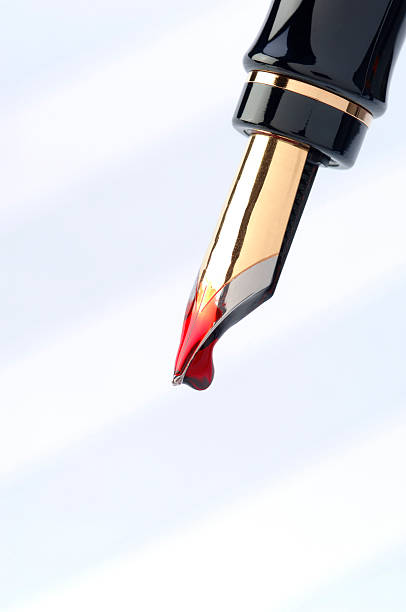
Une image de stylo à plume noir à détail dorée avec une goute d'encre rouge qui est sur le point de tomber.

Water-based ink

We generally use a fountain pen with water-based ink, ensuring good ink flow.
It is then preferable to use ink of the pen’s own brand, perfectly suited to it, even though some brands such as Waterman are compatible with many other models

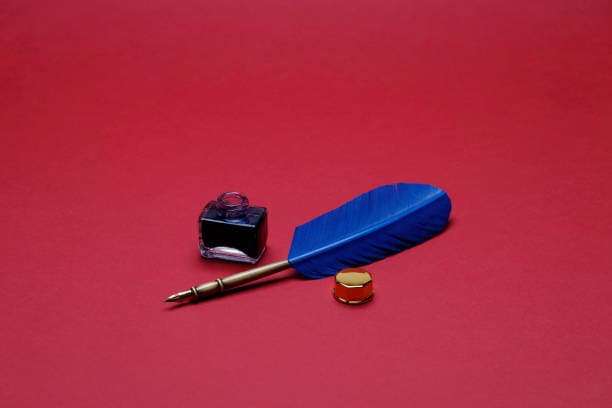
Image d'une plume bleu avec un encrier sur fond un rouge.

Pigment-based ink

Pigment-based inks are more resistant to water and UV than water-based inks. They are made of fine pigments mixed with a synthetic resin solution or an acrylic binder. They produce darker, more opaque lines, making them ideal for precision work such as writing official documents or technical sketches. They are also less prone to fading than other types of ink. However, they tend to be more expensive than water-based inks and may require frequent cleaning to prevent clogging.

Image de taches d'encre et un stylo plume sur une feuille de papier blanche.

Oil-based ink

Oil-based inks are thicker and dry more slowly than other types of ink, but they produce darker, smoother lines. They are made of oils, dyes and synthetic resins. Ideal for work that requires a lot of liquid, such as calligraphy or handwriting. They also have better water resistance than water-based and pigment inks. However, they are harder to clean and may not fade as quickly as pigment-based inks.

Image d'un encrier avec son encre bleue renversé et accompagner d'un stylo calligraphique. Image d'un encrier avec son encre bleue renversé et accompagner d'un stylo calligraphique. Image d'un encrier avec son encre bleue renversée, accompagner d'un stylo calligraphique.

The choice of ink can have a major impact on how you write and feel. Choosing the best type of ink for your needs can improve writing comfort and extend the life of the nib. We hope this article has helped you understand the advantages and disadvantages of the different types of fountain pen ink. If you have any questions or comments, feel free to leave us a message below.

Read more

How to fix a fountain pen that won't write anymore?

A fountain pen is a popular and elegant writing tool, but it can sometimes break down. If your fountain pen no longer works and no longer leaves ink marks, don’t worry — there are simple methods to repair it.

1. Check the ink cartridge

The first thing to do is check the ink cartridge. If it is empty, replace it with a new one. If the cartridge is full but the pen leaves no ink, remove it and try shaking it gently to release the ink. If that doesn’t work, try replacing it with a new cartridge.

2. Clean the pen nib

If the ink cartridge is full and the pen still leaves no ink, the nib may be clogged. To solve this, soak the pen nib in warm water for a few minutes to soften the dried ink. Then wipe the nib with a clean, dry cloth.

Image d'un stylo à plume laissant de l'encre sur un mouchoir en papier.

3. Use distilled water

If the fountain pen uses water-based ink, it is recommended to use distilled water to clean the pen nib. Tap water can contain minerals that can clog the nib.

Image montrant un bocal avec un thermomètre et de l'eau distillée à l'intérieur.

4. Use a fountain pen cleaner

If the nib is still clogged, use a fountain pen cleaner. Simply fill a small bowl with warm water and add a few drops of fountain pen cleaner. Dip the pen nib into the mixture for a few minutes, then rinse it with warm water and let it dry completely before using the pen again.

Image montrant une boîte portant une inscription "nettoyant pour stylo" accompagnée de ses cartouches.
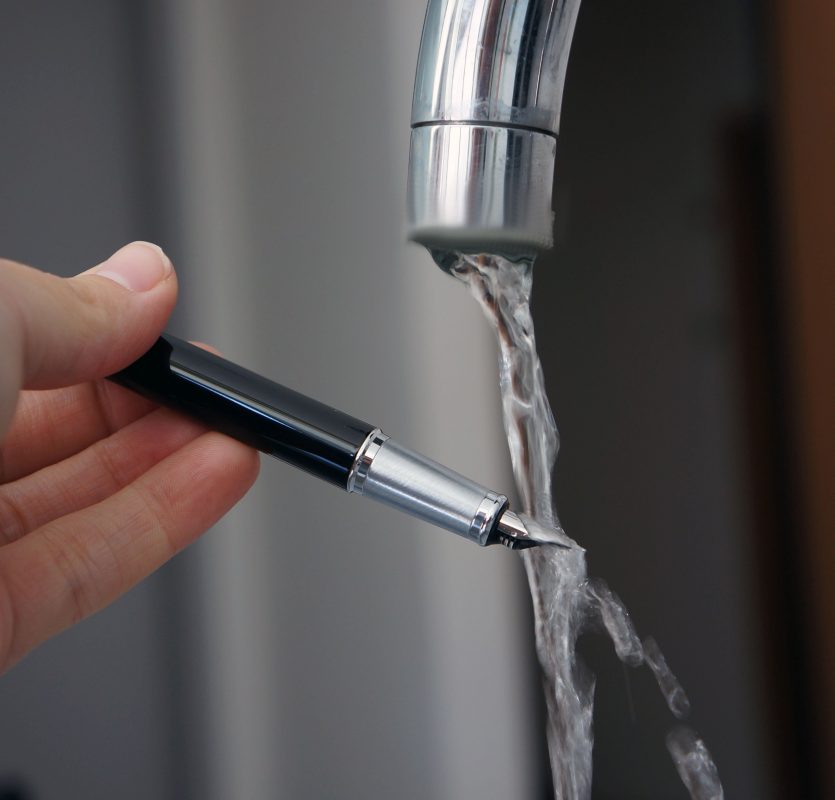
Image d'un stylo à plume maintenu sous un robinet qui coulant.

5. Adjust the nib

If the nib is bent or deformed, you can try to straighten it gently using tweezers. Be very careful not to damage the nib.

By following these simple steps, you should be able to repair a fountain pen that no longer works. If the problem persists despite your efforts, it may be necessary to have the pen repaired by a professional.

Read more

Why learn to write with a fountain pen?

Handwriting is an important skill that is increasingly neglected in our digital world. Yet learning handwriting can offer many benefits, especially when done with a fountain pen. In this article, we look at the value of learning to write with a fountain pen.

1. Improve writing quality

Using a fountain pen can help improve the quality of your writing. Unlike ballpoint or gel pens, which tend to glide over the paper, fountain pens have a nib that allows precise control of the pressure applied to the paper. This produces cleaner, more precise writing that can be easier to read.

Image montrant un stylo plume en train de tracer une ligne sur un papier blanc.

2. Develop a personal handwriting

Using a fountain pen can also help develop a personal handwriting. Fountain pens have unique characteristics that can influence the way ink is deposited on the paper. As a result, everyone who uses a fountain pen will develop a unique handwriting that can become a personal signature.

3. Improve posture and coordination

Handwriting with a fountain pen can help improve posture and coordination. Using a fountain pen requires a certain finesse and precision, which can help strengthen the muscles of the fingers, hand and wrist. It can also help improve posture by encouraging a straighter, more stable position.

Image centrer sur les mains d'une personne qui écrit avec un stylo à plume.

4. Encourage concentration and creativity

Handwriting with a fountain pen can encourage concentration and creativity. Using a fountain pen requires increased attention and concentration, which can help stimulate creativity and imagination. In addition, handwriting can help you memorise information better, which can be useful for students.

5. Avoid digital distractions

Finally, using a fountain pen can help avoid digital distractions. When you use a computer or smartphone to write, it is easy to be distracted by notifications and apps. Handwriting with a fountain pen lets you focus on the task at hand without being distracted by digital technology.

In conclusion, learning to write by hand with a fountain pen can offer many benefits, both for writing quality and for health and creativity. If you are looking to improve your writing or avoid digital distractions, using a fountain pen may be an interesting option to consider.

Read more

How to store a fountain pen?

Portada-Blog_8db00c54-f9d7-4ff0-86a4-0064717a2561_1400x

Taking care of your fountain pen can be a matter of debate. Depending on the pen’s age and when you use it, the type of care varies, but is just as important.

Maintenance advice

SHORT PERIODS WITHOUT USE

For short periods of days or weeks, fountain pen experts traditionally recommend storing pens upright with the nib pointing up. If you keep it level, the ink will be in constant contact with the feed, which can saturate the feed and damage the cap.

Fountain pens should be emptied and completely dried if they are to remain unused for months or years. That way, you don’t have to worry about further damage such as drying out the next time you use it. This is the best way to keep it like new. So, when you change ink colour, you can wash it with normal water.

The cap is normally sealed, which helps keep the ink flowing even with daily use of the pen. However, it can become harmful if not used for a long period. Water vapour can corrode the internal metal parts and the nib tips.

For this reason, we recommend leaving the pen upside down and uncovered for at least two weeks to allow the water to evaporate completely. For thorough drying, press the tip of the nib against an absorbent surface such as a paper towel to speed up the removal of moisture.
Once the pen is empty and dry, it can be stored horizontally in its protective case.

A5606-178_1-1920w.jpg

Additional tips

PERIODIC CLEANING OF THE FOUNTAIN PEN

It is recommended to clean your fountain pen regularly, once every 2-3 months. It is also recommended to clean it when you replace the ink. For more advice on maintaining your fountain pen, see our blog. A simple task that takes only a few minutes to keep your fountain pen in good condition.

USE A CASE

Fountain pens are delicate, so it is important to carry them in a case to prevent them from falling or being damaged.

Silver is a common material for pens and easily tarnishes from silver to black or purple. Fortunately, this oxidation can be removed with silver cleaners readily available in supermarkets.

49919649157_11a7e5acdc_o-1920w.jpg
Read more