You've found a pen in a drawer, inherited a collection, or you want to sell a piece? Estimating the value of a fountain pen requires knowing a few key criteria. Here's how to see clearly.
The criteria that determine value
The brand and model : a great house (Montblanc, Parker, Waterman, Pelikan…) and a sought-after model are worth far more.
Rarity : limited editions, special series, old models produced in small numbers.
Condition : often the decisive factor (see below).
The original set : box, papers, warranty and accessories significantly increase the value.
Age and authenticity.
Condition: the key factor
For a given model, the price gap between an “like new” pen and a worn one can be considerable. An example never inked, without scratch or crack, with its original box and papers, reaches the best prices. Conversely, a bent nib, a cracked body or a broken filling system sends the value tumbling.
The most sought-after brands and models
Some pieces are particularly prized by collectors: the Montblanc Meisterstück 149, Les Montblanc anciens tels que L 134, L 136, L 139, 149 Silver rings, le Parker 51, the Parker Duofold range, the Waterman Exception, Edson, Sérénité or Patrician and Pelikan vintage or more recent ones such as the M 600, M 800 or M 1000 range, or limited editions (Writers Edition, Patron of Arts…). Solid gold models and special series reach the highest valuations, especially right now with the high price of gold.
Also highly sought after are Japanese pens from the 1920s–30s or more recent, from brands such as Dunhill or Dunhill Namiki.
Beware of counterfeits
Major brands such as Montblanc are massively counterfeited, and a counterfeit has no collector value — no value at all.
If in doubt, especially if the price is particularly low, seek advice and, if possible, have authenticated the piece by a specialist before any transaction.
How to have your pen valued
For a reliable estimate, the best option is to call on an expert in writing instruments, who knows the market and recent sale results. At Aretoile, we value and buy back collectible pens: send us photos and a description, and we will offer you a buy-back price.
If you are in the Paris area, an appointment is possible in Paris 9th, Opéra district, after describing and sending us photos of the pieces you wish to sell.
Fountain pens come in a variety of styles, shapes and sizes, each offering unique advantages for different writing styles and uses. Here are the most common types of fountain pen and how to choose one according to your needs.
Classic fountain pens
These fountain pens are the most common and perfect for everyday use. Often made of stainless steel, brass or resin, they are available in a variety of sizes and shapes to suit a variety of hands.
Calligraphy fountain pens
If you want to add an artistic touch to your writing, calligraphy fountain pens are the answer. The broad nib allows more precise control over line variation and thickness.
Pocket fountain pens
A pocket fountain pen that lets you write quickly on the go is handy. They are often compact and lightweight, but may have a smaller nib than regular fountain pens.
High-end fountain pens
High-end fountain pens are designed for collectors and discerning users. High-end materials such as gold, platinum and titanium are used to ensure superior quality and durability.
Special fountain pens
Finally, there are many special pens for different applications. Pens for left-handers, pens with built-in reservoirs for easy filling, and even pens for extreme environments such as space.
Choosing the type of fountain pen suited to your needs ensures optimal writing comfort. Whether you are a student, a professional or a writing enthusiast, you will find the perfect fountain pen for you.
Click hereto see all the pen models Aretoile offers you!
One of the key features of a fountain pen is the nib itself, and the writing feel and line quality change considerably depending on the shape and size of the nib. This article explores the different fountain pen nibs available, including regular nibs, oblique nibs, italic nibs and reverse oblique nibs.
Regular nib
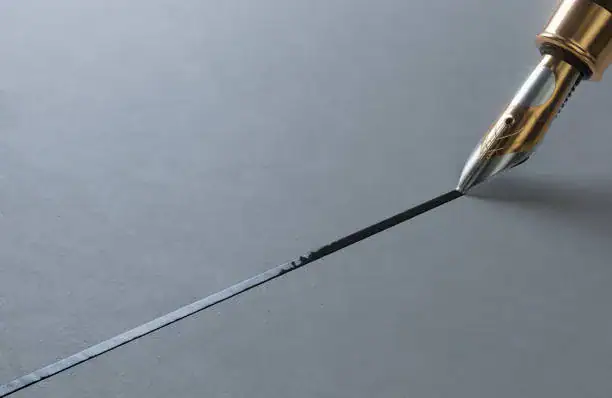
Regular nibs are the most common and the easiest to use. They have a straight shape and create a uniform line of constant width. Ideal for everyday writing and suitable for all handwriting sizes.
Reverse oblique nib
The reverse oblique nib is cut at an angle, but in the opposite direction to the oblique nib. This means the lines created will be thicker in one direction and thinner in the other. This nib is ideal for people who write in reverse or who use a lot of pressure.
Reverse oblique italic nib
The reverse oblique italic nib is a combination of a reverse oblique nib and an italic nib. Made with a diagonal cut in the opposite direction to the oblique nib, but with a steeper slope so that one line is thinner and the other thicker. This nib is perfect for those who write in reverse and want smooth, stylish writing.
In short, there is a wide range of fountain pen nibs to choose from, each offering a unique writing experience. Whether you prefer elegant, stylish lettering or more practical lettering for everyday life, the choice is yours.
Oblique nib
The oblique nib has a bevelled shape cut diagonally. This lets the tip of the nib sit at an angle to the paper for smoother, faster writing. As the nib is angled, it is ideal for those who write in cursive.
Oblique italic nib
The oblique italic nib is a combination of an oblique nib and an italic nib. Like the bevelled nib, it is cut diagonally, but with a steeper slope, one line thinner and the other thicker. This nib is perfect for those who want an elegant, stylish font.
Italic nib
The italic nib is cut diagonally like the oblique nib, but more pronounced. This means the lines created will be thinner in one direction and thicker in the other. Italic nibs are ideal for stylish, elegant writing, but they take a little practice to master.
Luxury pens are high-quality accessories that offer a unique and special writing experience. The materials used, the design and the advanced features make these pens popular with those who appreciate quality and style. In this article, we look at the main features of luxury pens to help you better understand what makes them so special.
The materials
Luxury pens are made from high-quality materials such as gold, silver, lacquer, titanium, resin and precious wood. These materials are chosen for their beauty, durability and unique feel.
The nib
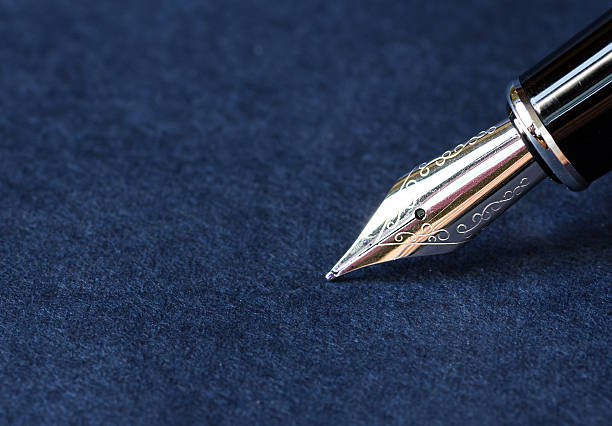
The nib is one of the most important features of a fine pen. 18-carat gold nibs are often used for their flexibility, durability and ability to hold ink. The tip can also be adjusted to suit the user’s hand and writing style.
The design
Luxury pens are often designed to be works of art in themselves. The shapes, patterns and engravings can be highly detailed and customised for each pen.
The features
Luxury pens include advanced features such as an innovative ink-filling system, an opening and closing mechanism, an ink-level indicator and a practical pocket clip.
Luxury pens are unique and special objects that offer an exceptional writing experience. You can add elegance to your everyday life by choosing a high-end pen with features suited to your needs and personal style. Luxury pens include advanced features such as an innovative ink-filling system, an opening and closing mechanism, an ink-level indicator and a practical pocket clip.
Luxury pens are more than just a writing tool. They are a statement of style and sophistication, a symbol of prestige and success. Whether you are a passionate collector or a demanding professional, a luxury pen can offer you many benefits.
1. Superior writing quality
Luxury pens are often made with high-quality materials and particular attention to detail. This results in superior writing quality. Luxury pens have smoother ink flow, a more precise nib and perfect balance. This lets you write more easily and more quickly, without fatigue or smudging.
2. Optimal writing comfort
Luxury pens are designed to be comfortable to use. They are often thicker than standard pens, which makes them easier to hold and handle. In addition, luxury pens are often heavier, which makes them more balanced and more stable while writing. You can therefore write for hours without feeling tired or uncomfortable.
3. Greater durability
Luxury pens are made with high-quality materials such as gold, silver, lacquer or precious wood. This makes them more resistant to scratches, knocks and wear than standard pens. In addition, luxury pens are often designed to last a lifetime. You can thus pass your luxury pen down as an heirloom to your children or grandchildren.
4. A symbol of prestige and success
Luxury pens are often associated with professional success, social recognition and prestige. Owning a luxury pen can therefore be a symbol of achievement and social status. It can help you stand out in a competitive professional environment and give you added confidence.
In conclusion, luxury pens offer many benefits. They give you superior writing quality, optimal comfort, greater durability and are a symbol of prestige and success. If you are looking for a pen that will help you stand out, gain confidence and improve your writing quality, a luxury pen could be an excellent choice.
Choosing a luxury pen can be a difficult task, as there are many different styles, brands and materials. Here are a few tips to help you choose the luxury pen best suited to your needs.
1. Determine your budget
Luxury pens can cost several hundred, or even several thousand, euros. Before you start looking for a luxury pen, determine your budget. This will let you focus on the pens that match your price range.
2. Consider how you will use it
Think about how you will use your luxury pen. If you are looking for a pen to write with every day, you will need a sturdy, easy-to-use pen. If you are looking for a pen to sign important documents, you will need an elegant, sophisticated pen. If you are looking for a pen to collect, you will need a rare and precious pen.
3. Try the pen before buying it
Try the pen before buying it to make sure it suits you. Test the grip and the writing to make sure the pen is comfortable and easy to use. If you buy online, make sure the seller has a flexible return policy in case you are not satisfied.
4. Look for quality brands
The best-known luxury pen brands, such as Montblanc, Parker, Waterman or Cross, are often a mark of quality. They offer durable, well-designed luxury pens made from high-quality materials.
5. Choose a material that suits your style
Luxury pens are often made from materials such as gold, silver, lacquer, precious wood or leather. Choose a material that suits your style and personality. If you are looking for an elegant, sophisticated pen, go for a black lacquer or silver pen. If you are looking for a more original pen, go for one in precious wood or leather.
In conclusion, choosing a luxury pen can be a pleasant and rewarding experience. By determining your budget, considering how you will use it, trying the pen before buying it, looking for quality brands and choosing a material that suits your style, you can be sure to find the perfect luxury pen for you.
Here are the various points to consider before making a purchase.
Which type of pen?
First of all, you should choose the type of pen you feel most comfortable writing with (felt tip, rollerball, ballpoint, fountain pen). Ballpoints and rollerballs are more practical, for example in a professional context. The fountain pen allows more variation and writing effects, for example with a flexible nib, but can be less practical for everyday use (risk of leaks, refilling the ink, etc.). The fountain pen often produces a more elegant line that gives more sensation.
Are you right-handed or left-handed?
If you are left-handed, a Fine nib will generally be more suitable.
If you are right-handed, all the options are open to you; the broader nibs often suit generous handwriting better.
Choosing the material
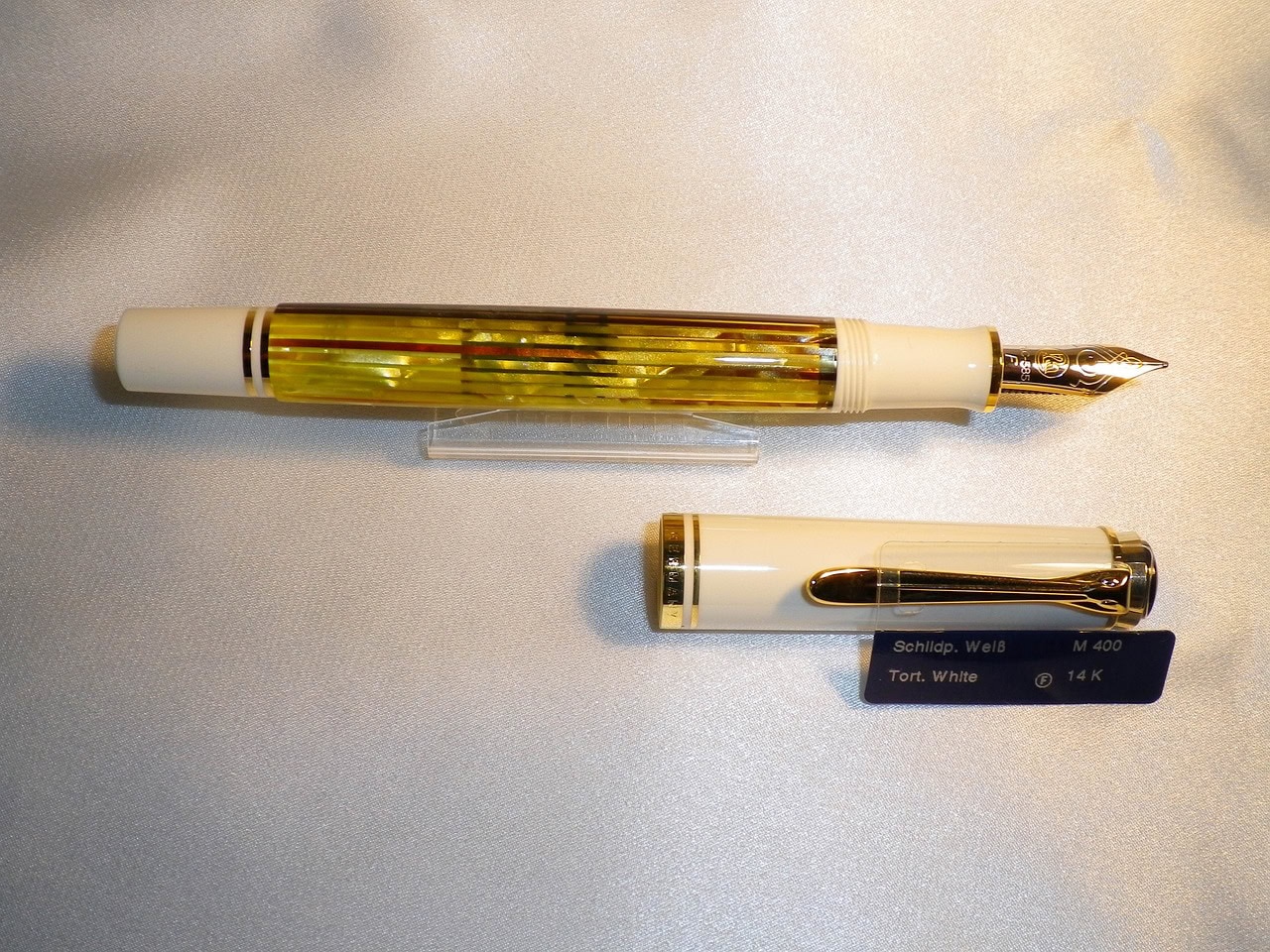
In the most recent pens, you mainly find pens in lacquer, resin or metal. Lacquer or metal pens are generally heavier and can give an impression of quality. Nevertheless, among the resin models you also find very beautiful, sought-after versions, such as the Duofold range from PARKER.
Lacquer pens are very chic, but more fragile in use, because of the risk of scratches. There are also wooden versions, made in the 1980s by WATERMAN, quite fragile (cracks or ink stains that are hard to remove from the wood) but very beautiful and very pleasant to use.
Choosing the filling system
Most major brands (Sheaffer, Pelikan, Montblanc, Waterman, Parker, Sailor, etc.) use their own cartridges for recent models, since the 1970s.
Some versions, often more high-end, are piston-fill.
Other versions can be used either with cartridges or with a converter, which allows them to be used with a bottle of ink, like a piston-fill pen.
Cartridge pens have the advantage of being practical to use, but piston-fill versions are more pleasant thanks to the handling involved in loading the ink.
Moreover, with the latter, it is possible to use uncommon ink colours, such as purple, light red or sienna, which are not available in cartridge format.
Selecting the nib
The nib is the point of contact between the pen and what you write; most nibs are made of metal, gold-plated metal, or solid 14- or 18-carat gold. The highest-end models are generally fitted with gold nibs; nevertheless, in the history of the pen, some models such as MONTBLANC produced models with a steel nib, for external reasons (i.e. during the Second World War, when gold was very scarce, so nibs were made of steel), and also for reasons of design or fashion, such as the Montblanc Turbo version, for which the metal nib suits the look of the pen much better than gold.
The gold nib provides very pleasant sensations; 14-carat gold nibs are more rigid than 18-carat gold nibs. On some models, such as older ones, the nibs are Flexible or semi-Flex, allowing very beautiful writing effects to be produced. In terms of nib sizes, there are many options, the main sizes being Medium, Fine, Large or Broad.
More rarely you find nib sizes XF / Extra-Fine; BB Extra Broad; Oblique, right Oblique, left Oblique, Italic. Generally, the more expansive and extravagant your handwriting, the more you will appreciate a Broad nib size, and vice versa. This can also depend on the language written; i.e. in Asia and the Far East, F or XF nib sizes are more appreciated, as they allow Asian characters to be written precisely, unlike broader nibs.
How to identify the nib size on a pen?
The best thing is to be able to try it; some sellers can send you photos of the writing strokes to give you a clearer idea. Some brands can also indicate the nib size in various forms:
At Waterman, there is often a letter, M, F or L, on the black part under the nib.
At PELIKAN, the nib size is often engraved on the nib itself in the form of a letter.
At PARKER, there is a letter on the black part under the nib, or a number corresponding to a particular type of nib.
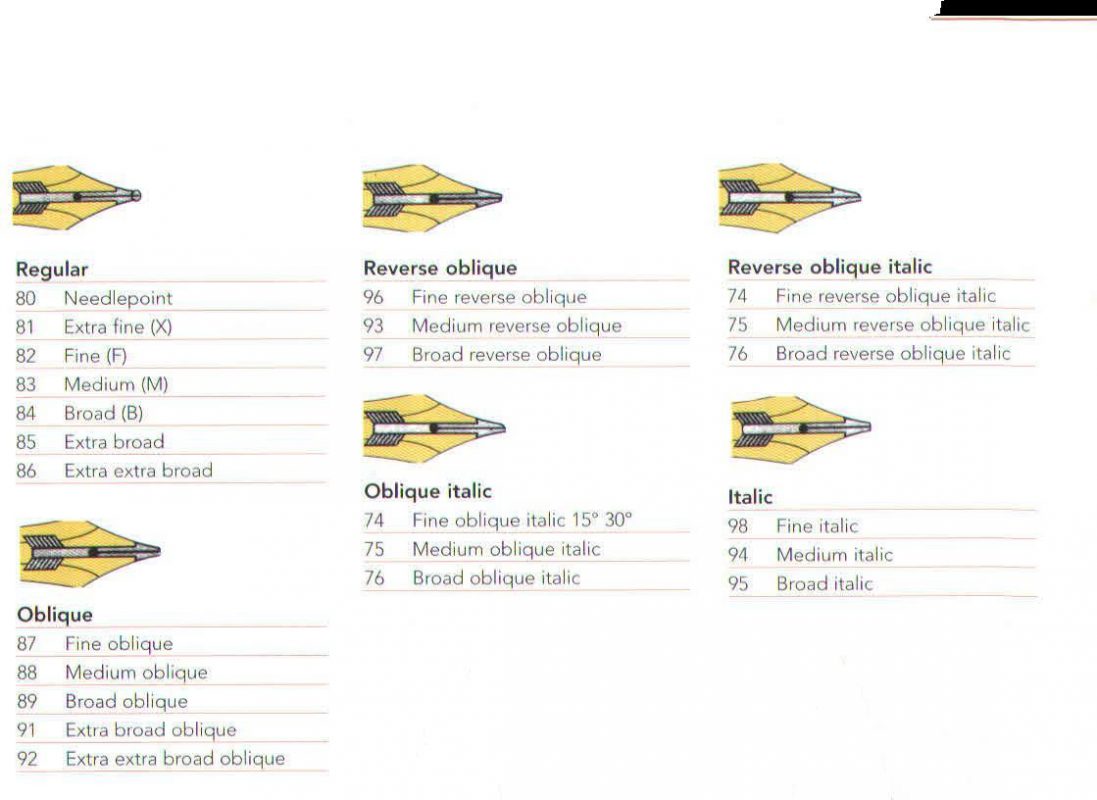
Here is an example of the wide variety of nibs possible on a pen:
The price
In general, the higher up the range you go, the more expensive it is, particularly because of the materials used and the fact that the nib is solid gold with fine finishes. Some old models in lacquer or ebonite can reach high valuations (i.e. Viala and especially Dunhill and Dunhill Namiki).
Special edition
Some manufacturers, such as MONTBLANC, PELIKAN or PARKER, offer special or limited editions. Among the best known is the Writers series from MONTBLANC, released almost every year and with a book-shaped box. The most famous versions include Hemingway, Alexandre Dumas, Marcel Proust, Franz Kafka, Jules Verne, Miguel de Cervantes, Agatha Christie, Oscar Wilde, Leo Tolstoy, Carlo Collodi and Victor Hugo.
At MONTBLANC there is also a series of pens called “the Patrons of Art” on the theme of great figures, notably from science, industry or finance. Among the most famous are the Prince Regent, Lorenzo de Medici, Nicolaus Copernicus, Louis XIV, Charlemagne, Semiramis, Pope Julius II, Andrew Carnegie, Steinway, Luciano Pavarotti and J.P. Morgan versions.
At PELIKAN, there are variations of the M 600 or M 800 models on the theme of the world’s major cities, such as Toledo, Stockholm, Madrid or Shanghai. Prestigious models have also appeared, such as the Maki-e versions made in Japanese lacquer; the famous nib of these series probably corresponds to the seven wonders of the world.
At PARKER, you can find prestigious versions based on the DUOFOLD series, such as solid gold versions, the Mandarin version, or the limited series in Maki-e lacquer with a tiger or carp motif, which have a certain value.
Why a fountain pen?
I must say that writing with a fountain pen evokes a feeling like no other. The grain of the nib in contact with the paper, the smoothness of the pen’s body, the agility of the writing, the friction of the paper, etc. So many senses that make writing sublime and full of grace.
Once a symbol of culture and wealth, this luxury item seems to have been forgotten by most of us. Yet our elite has never moved away from using it.
Every American president since Franklin Delano Roosevelt has signed numerous pens, statutes and official documents. On 23 March 2010, Barack Obama launched the Health Care Act with 22 AT Cross rollerball pens before giving them to his staff. According to The Times magazine, George W. Bush is said to have kept one of the pens used to sign the Homeland Security Act following 11 September. Even in Europe, it is common for politicians to collect the “spoils” of these works. Nicolas Sarkozy, Silvio Berlusconi… the examples of lovers of fine pens are numerous.
Adorn yourself with the finest jewels made from precious woods, precious metals and more. In recent years, fountain pens have become jewellery and are gradually regaining their aristocratic character. Fountain pen prices can range from 100 euros for high-quality pens to tens of thousands of euros for rare models. Thus, the finest luxury brands offer limited series that regularly appear in auction houses and are snapped up by enthusiasts at exorbitant prices.
What is the history of the fountain pen?
The history of the pen began with the quill. The main drawback of the quill was the lack of ink flow. It was necessary to constantly dip them in the inkwell to keep enough ink to write. Fountain pens were the first and best solution to eliminate the need to keep the nib dipped. The invention made perfect sense. It consisted of incorporating a water-based ink reservoir and a metal spring system.
Fountain pens can be filled in different ways depending on the pen’s mechanism. Some require a dropper, a syringe or a refill system to dispense the ink, some use a piston and some use a cartridge. After filling, the ink flows through the feed tube by the principle of gravity and capillarity, towards the metal tip, ready to write. Not only goose quills, but also duck, crow, eagle or rooster feathers were used to write on parchment. Ancient Rome preferred the calamus (in reed or bronze) and Egypt preferred copper pens.
In the period 973 AD, the book mentions the first use of ink reservoirs. The inventions would come from the Maghreb. The caliphs are said to have preferred a writing system that allowed them to keep their hands clean. Satisfied with the solution his servant is said to have offered him, the ink pen entered history. Metal nibs were not invented until 1820, thanks to new, more flexible and lighter steels.
These devices required the quill to be relentlessly dipped in the inkwell. And the pen could not feed itself until Petrache Poenaru invented the portable pen holder in 1827. But ink reservoirs are far from perfect… In the period of 973 comes the first pen mentioned with an ink reservoir design. The caliphs of North-West Africa – the Maghreb – once asked for pens to keep their hands clean without leaving ink. He then said he was happy to have a pen with an ink reservoir that could be turned over so the ink could flow without spilling.
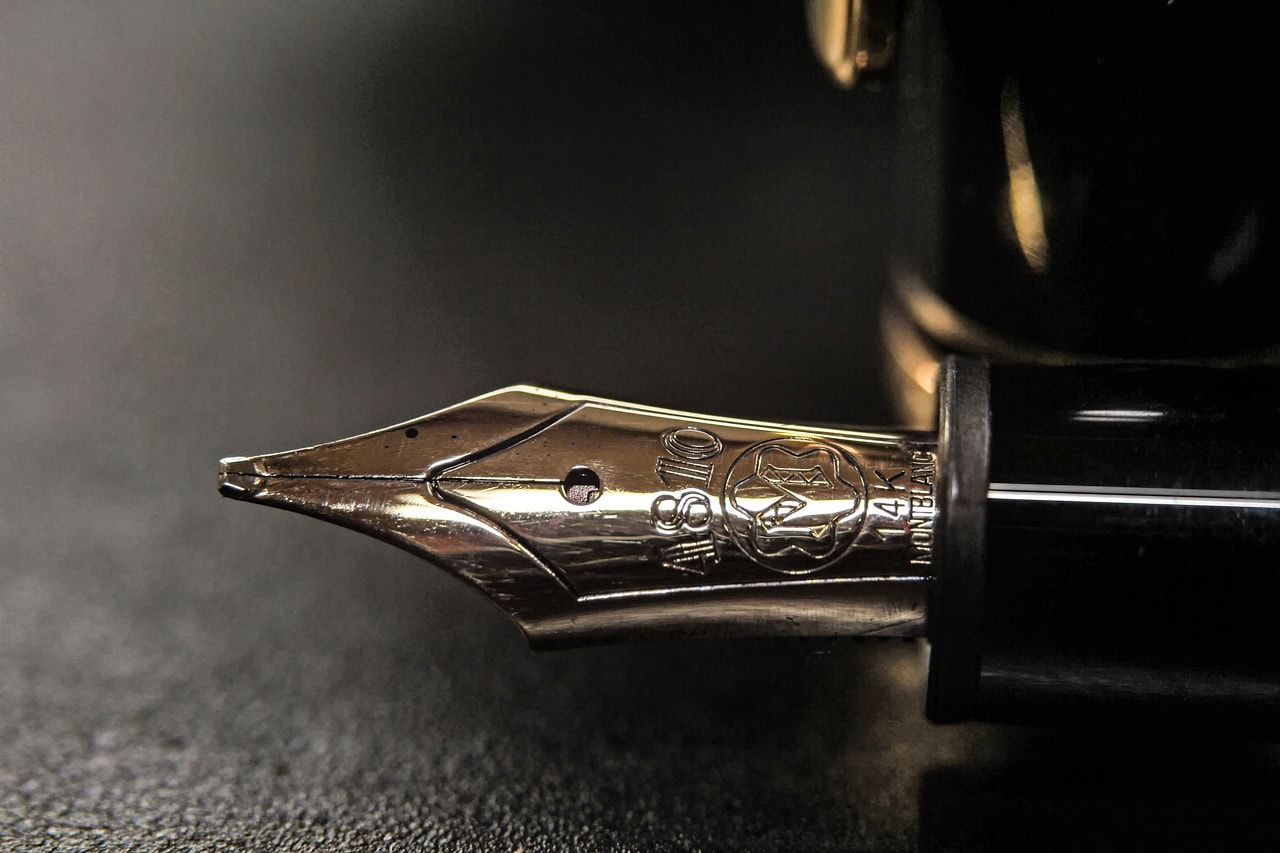
Telling a genuine MONTBLANC pen from a fake is not easy for most people.
Moreover, counterfeiters’ techniques improve year after year, with finishes that are increasingly beautiful and precise.
As a preliminary point, where you buy affects the risk of counterfeiting: buying a new product from an authorised MONTBLANC boutique is far less risky than buying a second-hand item on a peer-to-peer resale marketplace.
Here are a few points to watch out for.
The serial number
The presence of a serial number is not a guarantee of authenticity. In fact, many genuine MONTBLANC pens have no serial number, particularly in the Meisterstück range produced before 1991.
If in doubt, type the serial number into an Internet search, and you may find a photo of an identical pen on a Chinese website, for example.
The location of the serial number also matters.
On some Starwalker models, it must be engraved on the ring supporting the clip, not on the clip itself.
The finish
The finish is a matter of judgement; easier to see in person than in a photo. Genuine MONTBLANC pens are often made of good-quality resin and not plastic like the counterfeits. Genuine MONTBLANC pens are well fitted at the trims and separation rings. Likewise, the serial number, when there is one, is neatly engraved, without imprecision, and perfectly straight.
On some smooth metal models, in fountain-pen or rollerball version, the finish can be really close to a genuine model. The detail that lets you tell them apart comes from how the cap closes. On counterfeits, it clips on, whereas on genuine models it screws on. In addition, the mount of the star adorning the top of the cap sits higher than on genuine models.
Furthermore, on some ballpoint models, the thread at the cap is made of poor-quality metal, sometimes fitting rather badly.
The writing mode
There are far more counterfeit ballpoint and rollerball pens than fountain pens, particularly piston-fill models, as they are much harder to fake.
Some sellers of fake Montblanc pens do not hesitate to present their pens with a genuine MONTBLANC refill and a genuine box, to try to mislead buyers.
On a fake fountain pen, you may notice that the nib is not solid gold, as on most recent genuine models. It may be engraved “Iridium”, or “Germany”, or “18K”, but very crudely. The gold colour on fake nibs may be a simple coating that rubs off when you lightly rub the nib.
The colours
Some resin colours are not produced by Montblanc, except on certain special series or limited editions.
So if you find a bright red or apple-green “Montblanc” rollerball, it is a counterfeit.
For example, you find copies of the Montblanc Starwalker with marbled or grey resin finishes that were never produced by the Montblanc firm.
The prices
New prices are set within the brand’s catalogues. Sales and discounts are rare, given the strong demand throughout the year. So if the price is too low, be wary.
The same goes for second-hand models, which resell at a certain discount, depending on condition, but no more than that.
Computers take pride of place among writing instruments, but the pleasure of handwriting is still very much alive. To keep that joy alive, the greatest brands have turned pens into beautiful objects that are pleasant to use every day. Aesthetic and practical, so-called luxury pens have become the hallmark of influential figures. It is a genuine tool to help you show that you belong to the right social class. Wondering why you should treat yourself to a designer pen? This certainly has good reasons to twist your arm.
The high-end pen, a refined tool
It is no longer a secret. With the invention of new technologies, handwriting is becoming secondary. Today writing has become very rare and precious. So it is true that it should be done with fairly sophisticated equipment. Indeed, having a high-end pen that makes a great leap forward for every writing occasion is priceless. This discreet object is an essential tool for people who need to sign contracts or write handwritten letters. What could be better than finalising a valuable certificate with a valuable object? Buying a luxury pen is definitely a good decision to equip yourself with the ideal tool for the great moments of writing.
The high-end pen, an exclusive style
Your brand image should match all the objects you use. Indeed, pulling a promotional pen out of a suit during a high-level meeting looks cheap. Above all, your pen should set you apart and show that you have standing. If you want a totally exclusive style, Dupont Pens is the prestige brand you need. This type of pen embodies luxury and is made through a complex and time-consuming process. There are many popular models for men and women — ballpoint pens, fountain pens, rollerballs, mechanical pencils… a brand that makes all kinds of pens. As a result, the ergonomics of Dupont pens are among the must-have features of a luxury accessory.
The high-end pen, more aesthetic writing
A fine pen is a special writing instrument. This tool makes writing truly enjoyable. The precision of the tip and the nib is very exacting, which makes writing comfortable. The words formed with such a pen are close to perfection. Above all, don’t worry about running out of ink — most luxury refills are rechargeable. Beyond writing, today’s luxury pens are akin to fine leather goods. Very often this type of pen comes with a storage box or a beautifully designed case. These add prestige to the tool. It is certainly the tool you need to underline your individuality. In short, a luxury pen is something you need every day. With its reputation, it definitely highlights your taste for beautiful things.