History of the Pelikan brand
History of the Pelikan brand
Carl Hornemann founded the brand’s first factory in 1838 in Hanover, Germany.
At first, production consisted of paints and inks.
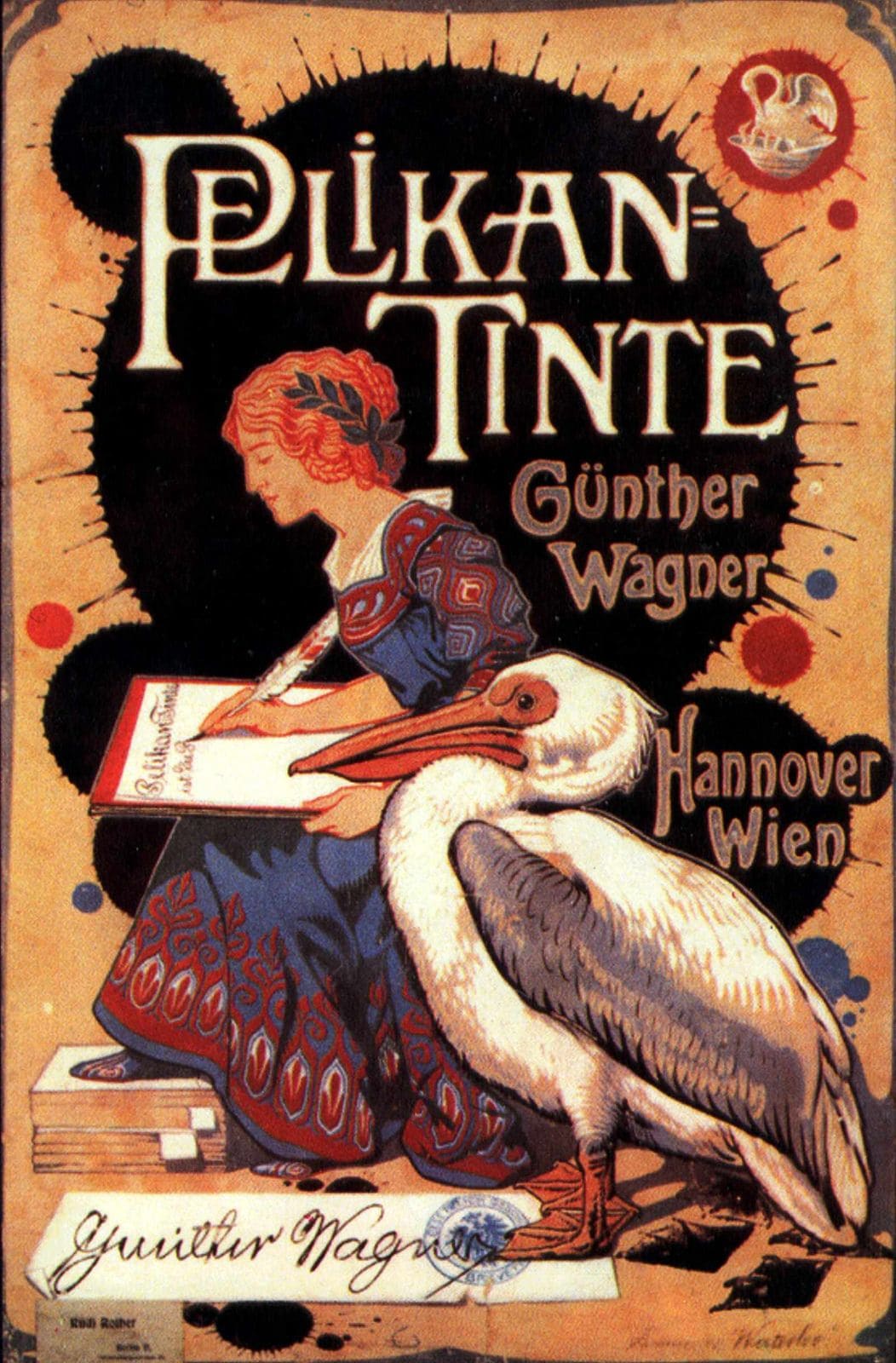
Günther Wagner, a chemical engineer, was a key figure in the brand’s development and took control of the company in 1871.
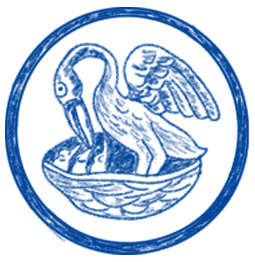
The trademark was registered on 27 November 1878, initially with a logo depicting a pelican in a nest, surrounded by three chicks.
From the 1890s, the company experienced rapid growth, largely driven by Fritz Beindorff, who opened it up internationally, first in Central Europe.
In 1895, Fritz Beindorff took over the running of the company, after marrying one of Günther Wagner’s daughters.
In addition to producing pens, he developed other related business lines such as stamping, copying, erasing and paper glue, and also began developing the production of India ink, which would later become famous.
In the 1920s, the company began producing its first fountain pens. At first these were manual piston fillers, drawing little ink and impractical.
Par la suite, Theodor Kovacs invente nouveau système de piston à engrenage différentiel et chambres de compensation, plus performant. Les premiers modèles célèbres sont la série des 100 N et 101 N, modèles assez courts, à pompe. Ceux-ci ont été produits principalement en noir, brun, rouge et couleur écaille de tortue ou encore lézard.
In the 1960s, the company created the Souverän range, which originally had a section in striped resin, referring at the time to Chancellor Stresemann, who very often wore striped suits. This very distinctive pattern would remain thereafter.
The Souverän range has an elegant design and comes in different sizes (M 200, M 300, M 400, M 600, M 800 and M 1000); at the time this range was intended to compete with the MONTBLANC Meisterstück.
At first, the pens were striped green and black; later, for some versions, blue and red versions were designed.
The brand then extended its range with special series, most often based on the M 600 or M 800, such as the Wall Street, Shanghai, Demonstrator, Blue Ocean, Golden Dynasty, Toledo, Hunting and White Ray versions.
The firm ventured both into producing “entry-level” models for schoolchildren — the Pelikan Pelikano — and into prestigious versions, such as those paying tribute to the seven wonders of the world.
This last limited edition includes seven models: the Pyramid of Cheops at à Giza, the Mausoleum of Halicarnassus, the Colossus of Rhodes, the Hanging Gardens of Babylon, the Statue of Zeus at Olympia, the Temple of Artemis at Ephesus, le et le Lighthouse of Alexandria.
Restez informé de nos nouveautés
Recevez en avant-première nos pièces rares, nos arrivages et nos conseils de collection. Désinscription en un clic à tout moment.
